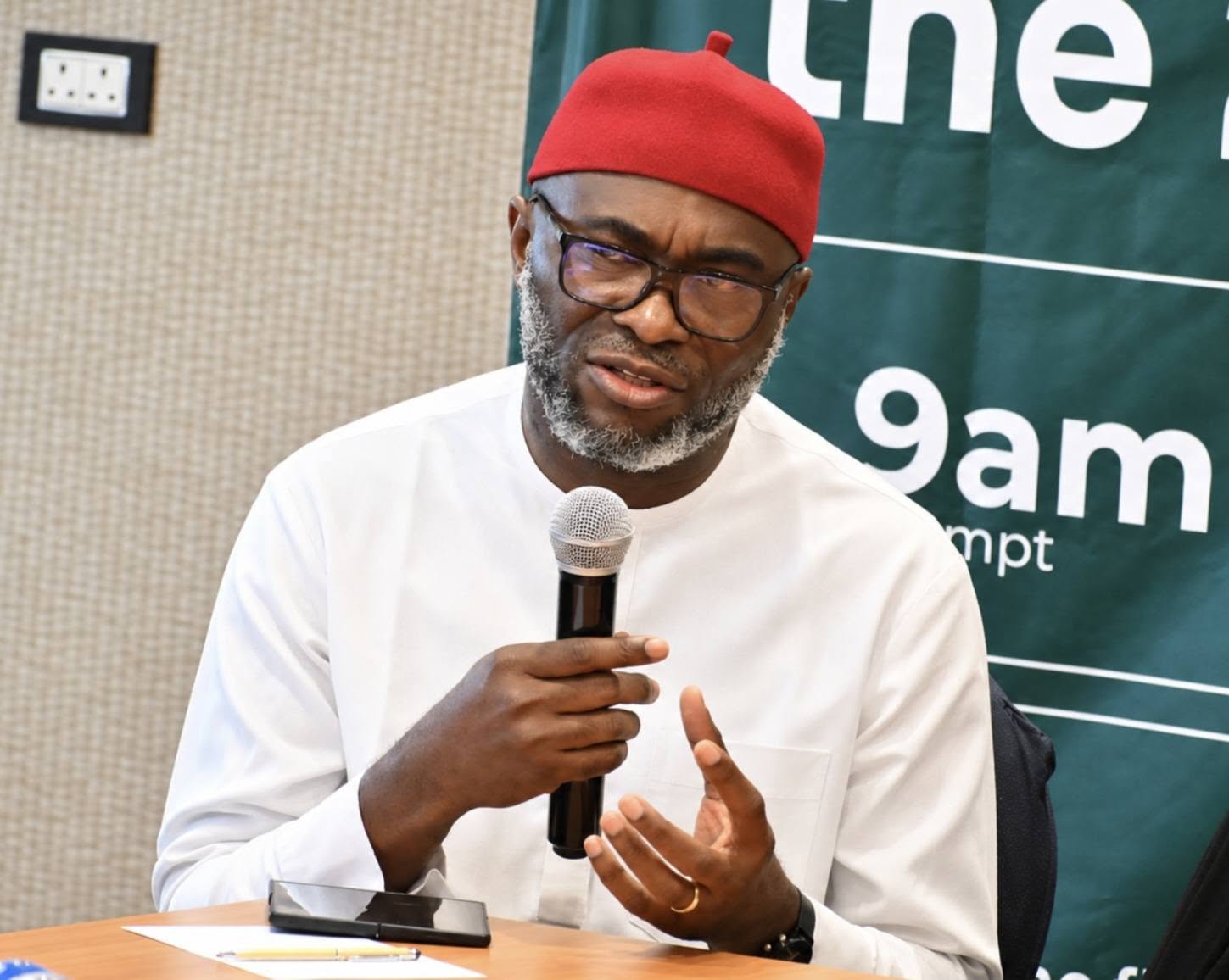
The National Chairman of the National Rescue Movement (NRM), Prince Chinedu Obi, has called for collective responsibility in addressing the concerns that could prevent Nigerians from participating in the 2027 general elections.
Obi, who also serves as Director-General of the Inter-Party Advisory Council (IPAC), participated as a panellist in a voter behaviour research validation meeting convened by Yiaga Africa with electoral stakeholders and civil society organisations. He attended on behalf of IPAC National Chairman, Dr Yusuf Mamman Dantalle.
The meeting examined findings from Yiaga Africa’s third National Voting Intentions Survey, titled Willing but Wary: 2027 Elections, which reveals substantial interest in voting alongside concerns about electoral violence, institutional credibility and economic conditions.
In an interview featured in ARISE News’ October 8, 2026 report on the meeting, Obi emphasised the importance of understanding what motivates citizens to vote.
“I think understanding those major issues around motivations to vote is very important,” he said.
He also stressed that addressing electoral challenges requires cooperation across institutions and political parties.
“We require everybody on the table, each party playing its own role,” Obi said.
Willing to Vote, Worried About Safety
The survey found that 84 per cent of respondents were likely or very likely to vote in 2027. However, only 47 per cent described themselves as very likely to vote.
Using a stricter measure combining likelihood of voting, certainty of choice and identification of a preferred candidate, the report classified 41 per cent as committed voters.
The distinction highlights a central challenge: an intention to vote does not automatically translate into participation on election day.
Fear of violence was the leading potential barrier, with 61 per cent saying it could prevent them from voting. Meanwhile, only 34 per cent expressed confidence in INEC’s ability to conduct credible elections.
Improved security was the most widely identified measure that could encourage participation, cited by 83 per cent of respondents.
These findings point to the need for practical assurances that citizens can reach polling units safely, exercise their choices freely and trust that their votes will count.
Jobs, Security and Governance Shape Voter Priorities
The research also provides a clear indication of the issues Nigerians want political leaders to address.
The economy and jobs ranked as the most important issue for 38 per cent of respondents, followed by security at 36 per cent and corruption and governance at 14 per cent.
For NRM, these findings provide a substantive basis for discussing the party’s Rescue Nigeria Blueprint, themed “Democratic Discipline for National Transformation.”
The blueprint sets out proposals across 24 policy pillars, including security, employment, infrastructure, education, healthcare, power supply and public accountability.
The connection between these priorities is practical. A young person seeking work needs an economy that creates opportunities. A small business needs reliable electricity and accessible transport. Families need safe communities, functioning schools and healthcare facilities capable of providing dependable care.
The survey’s findings reinforce the importance of asking parties and candidates how their programmes would respond to those needs.
From Security Concerns to Safer Communities
The blueprint’s Security, Peace and National Integration pillar proposes intelligence-driven policing, community security partnerships, strengthened border management and peacebuilding.
These proposals speak to the relationship between public safety and democratic participation. Citizens need protection during elections, while also expecting security in their homes, on their farms, along transport routes and in their workplaces.
The report’s findings suggest that voter mobilisation must therefore be accompanied by credible measures to address fear. Encouraging participation will have limited effect if citizens remain uncertain about their safety.
Roads, Schools, Hospitals and Reliable Power
NRM’s blueprint also provides specific proposals against which citizens can assess the party’s development agenda.
On infrastructure, it proposes a National Infrastructure Renewal Programme, road maintenance and the completion of major transport corridors. These measures address the need for safer journeys, better access to markets and more dependable connections between communities and essential services.
On education, the document proposes an education emergency, increased funding, teacher training reforms and expanded technical colleges. Its healthcare proposals include a Health Infrastructure Fund, upgrades to primary healthcare centres and wider insurance coverage.
These commitments bring the electoral debate closer to concrete questions: whether children can learn in properly supported schools, whether patients can obtain care in functioning facilities, and whether public investment produces services people can use.
For power supply, the blueprint proposes an integrated energy policy, grid expansion, off-grid solar development and rural electrification, with stable and affordable electricity as an objective.
Its employment agenda includes a National Employment and Skills Development Programme, expanded access to credit for micro, small and medium enterprises, support for manufacturing and a Youth Enterprise Fund.
Together, these proposals provide material for issue-based campaigning and public scrutiny ahead of 2027.
Rebuilding Trust Through Measurable Results
The survey’s findings on confidence in INEC concern electoral administration specifically.
The blueprint addresses a broader but related question: how government can earn citizens’ trust through transparency and performance.
It proposes public dashboards, measurable performance indicators, citizen feedback mechanisms, independent audits and a publicly available annual Rescue Nigeria Performance Report.
These mechanisms would allow citizens to assess implementation after elections and compare government performance with stated commitments.
That emphasis is particularly relevant to voters seeking evidence that political participation can lead to improvements in their lives.
Turning Voting Intentions Into Participation
Yiaga Africa’s survey drew on 2,470 interviews, comprising 2,066 telephone interviews across the 36 states and the Federal Capital Territory, alongside 404 face-to-face interviews in selected rural locations across the six geopolitical zones.
The findings describe reported intentions and concerns rather than a prediction of turnout.
The report also acknowledges limitations, including possible over-reporting of participation and differences between interview methods.
Nevertheless, its central message is clear: many Nigerians want to participate, but safety, confidence in electoral institutions and credible political choices will influence whether they do.
Obi’s call for every stakeholder to play its role reflects the shared work ahead. Electoral institutions must build confidence, security agencies must protect voters, and political parties must present programmes that respond to citizens’ priorities.
For NRM, the Rescue Nigeria Blueprint provides a framework for that policy conversation—and a set of proposals voters can examine as they consider the country’s future.