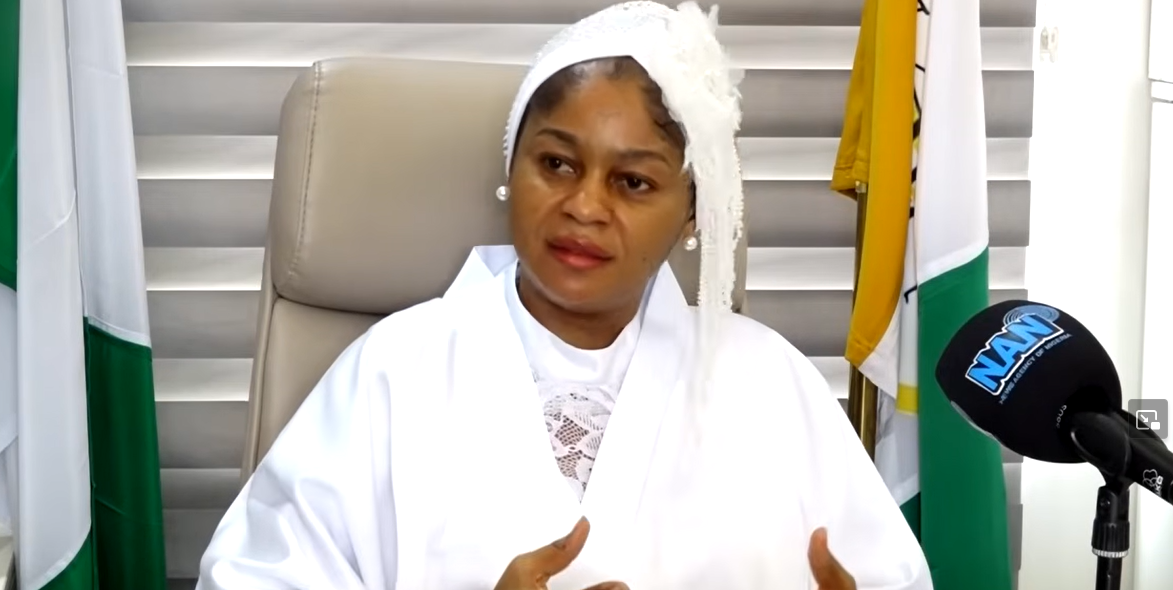
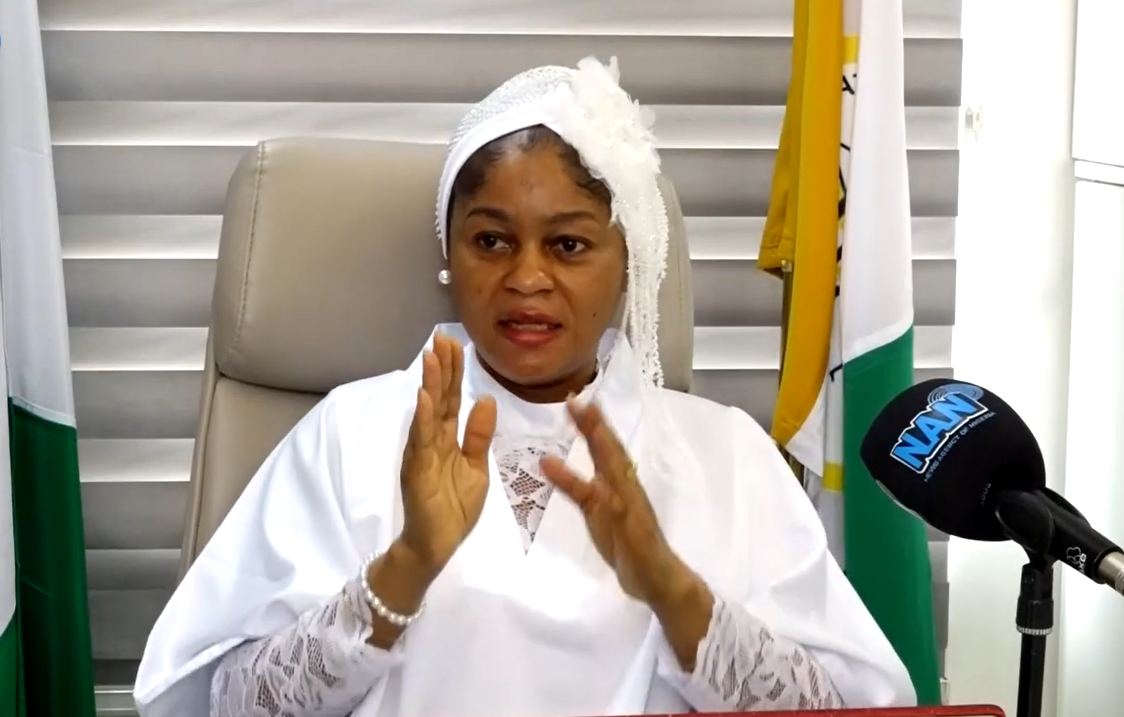
The presidential candidate of the National Rescue Movement (NRM), Dr Esther Okereke, has said her campaign offers Nigerians a framework for national recovery, with proposals addressing the everyday pressures facing families, workers and businesses.
Speaking on the News Agency of Nigeria (NAN) Personality Interview Series in Abuja, Okereke connected her presidential ambition to the need to overcome systemic failure and restore dignity, opportunity and confidence in government.
She also addressed the barriers facing women in politics, citing the small number of female presidential contenders and identifying intimidation, violence and restrictive social expectations as obstacles to participation.
“We’ve been told and brought up to believe that women should not participate in politics. But all of that has changed,” she said.
While advocating greater participation and protection for female candidates, she made clear that the substance of her candidacy lies in her proposals for governing Nigeria.
“I do not bring you gender politics. I bring you blueprints with framework. A plan to rescue.”
A framework for national recovery
That declaration captures the foundation of Okereke’s campaign: the ESTHER Agenda, a six-pillar framework connecting economic recovery, security, essential services, accountable government and productive opportunity.
The agenda comprises:
- E — Energy, Education and Economic Renaissance
- S — Security and Social Welfare
- T — Technology, Transformation and Transparency
- H — Healthcare and Housing
- E — Enterprise and Employment
- R — Resuscitation, Recovery and Reorientation.
The framework connects with the NRM’s broader Rescue Nigeria Blueprint, which contains 24 policy pillars addressing security, economic reforms, education, healthcare, entrepreneurship, institutional strengthening and infrastructure development.
Together, they place interconnected national challenges within a common programme: reliable electricity to support production, security to protect communities, education to develop talent, healthcare to protect families and institutions that use public resources responsibly.
The APC record and the demand for results
After more than a decade of APC federal leadership, economic hardship and insecurity remain central questions confronting the governing party ahead of 2027. Living costs, kidnappings and declining household welfare continue to shape public debate about its record.
For the NRM, the case for a different direction rests on the daily consequences of governance failures: unemployment that leaves talent unused, poverty that narrows opportunity, dilapidated infrastructure that restricts commerce and unreliable electricity that makes businesses more expensive to operate.
Insecurity compounds those pressures. Farmers need safe access to their fields, traders need secure roads and families need confidence that their children can learn and travel without fear.
The party’s rescue agenda brings these needs together, linking public safety with economic activity and infrastructure development with employment.
“My salary was ₦2,500”
Okereke brought the discussion of economic recovery into the household by recalling how her income once supported both her personal needs and her extended family.
“My salary was ₦2,500,” she said. “I set aside ₦500 for my daily running, my transportation to work and everything. Then the ₦2,000 goes for my family support.”
She described buying staple foods, travelling to Niger State and still providing support for her mother and younger siblings.
“If I tell you the things I buy with that, you’ll be amazed.”
Her account illustrates the purchasing power and household stability that economic policy must seek to rebuild. A salary should enable a worker to meet essential needs, support dependants and make plans beyond the next bill.
For Nigerians struggling with food, transport, accommodation and utility costs, that is a practical measure of whether economic recovery is reaching them.
Making essential services work for families
Okereke discussed a coordinated payment arrangement covering transport subscriptions, electricity, water and health insurance contributions.
“The light bill, the water bill,” she said, describing how essential utility charges could be brought into a unified billing arrangement.
Her stated objective was to organise essential expenses while leaving people with money to take home and plan their future.
She also linked health insurance contributions to the ambition of providing well-equipped hospitals.
The proposals connect several elements of the ESTHER Agenda: healthcare, social welfare, technology and economic recovery. Their purpose is to make essential services more dependable and household expenses more manageable.
For working families, the quality and cost of public services directly affect the value of their earnings.
Nigeria’s “liquid gold”: investing in people
One of Okereke’s strongest messages was that Nigeria must recognise the value of its people alongside its natural resources.
“We have oil, we have gold, we have lithium,” she said, also identifying agricultural resources such as cotton and cocoa.
She then turned to what she described as the country’s “liquid gold.”
“That’s our people. Our youth, our women.”
“We do not value them,” she added. “No dignity at home. That is why they are leaving the country.”
Her response is investment in human capital development—equipping Nigerians with the education, skills and opportunities to contribute productively.
“You would see what our youth can offer.”
This emphasis gives the education, enterprise and employment pillars of her agenda a shared purpose: enabling Nigerians to build livelihoods and contribute their abilities to national development.
Recovering stolen wealth to rebuild infrastructure
Okereke also proposed directing recovered stolen public wealth into a National Recovery Infrastructure Fund.
“We will recover it and put it in the National Recovery Infrastructure Fund,” she said.
She identified roads and mini-grids among the projects the proposed fund would support.
“There’s a lot we would do with our recovered funds.”
The proposal connects anti-corruption efforts with tangible public benefits. Recovered resources would help finance infrastructure that communities use and businesses depend on.
Better roads can connect farmers and producers to markets. Mini-grids can expand access to electricity. Functioning infrastructure can lower operating costs and support enterprise.
Within the ESTHER Agenda, recovery and transparency therefore have an economic purpose: helping turn public resources into productive assets.
A rescue mission grounded in everyday needs
Across the interview, Okereke returned to the relationship between national leadership and ordinary life: what people earn, what their income can buy, whether they can access healthcare and whether their talents have a place in Nigeria’s future.
Her proposals connect those concerns to the NRM’s wider programme for security, institutional reform, infrastructure and inclusive prosperity.
The standard she puts forward is concrete: government must create conditions in which citizens can live safely, work productively and support their families with dignity.
“I do not bring you gender politics. I bring you blueprints with framework. A plan to rescue.”
Watch the video interview:
- 2027: I came with plans to rescue Nigeria - NRM presidential candidate, Okereke
- 2 females in presidential ballot, highlights challenges facing Nigerian women in politics - Okereke
- 2027: NRM presidential candidate urges INEC to give financial support to female candidates
- 2027: I'm not intimidated by Tinubu, Atiku, Obi - NRM Presidential Candidate